
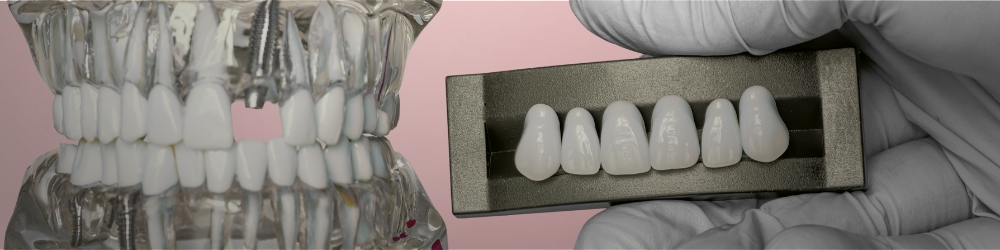
Replacing missing teeth is no longer a one-size-fits-all conversation. Modern implant dentistry offers several distinct types of dental implants, each designed to address a specific level of tooth loss. Whether you are missing a single tooth or an entire arch, there is a solution engineered for your exact situation.
Understanding the differences between these options is the first step toward making a confident, informed decision. Here is a clear overview of the types of dental implants available today, and how to determine which one is right for you.
What Are the Main Types of Dental Implants?
The types of dental implants are best understood by what they replace. Each category serves a different need.
Single Tooth Implants
A single tooth implant replaces one missing tooth with one titanium post and one custom crown. The post is surgically placed into the jawbone, where it fuses through osseointegration to create a permanent, stable root. Once healed, a porcelain or zirconia crown is attached to restore the tooth’s form and function.
Single implants are ideal when the surrounding teeth are healthy and only one gap needs to be addressed. They preserve bone at the missing tooth site, prevent adjacent teeth from shifting, and deliver results that look and feel natural.
Implant-Supported Bridges
When two or more adjacent teeth are missing, an implant-supported bridge offers an efficient solution. Rather than placing an individual implant for every missing tooth, two implant posts anchor a bridge that spans the gap.
This approach reduces the number of surgical sites while still providing the stability and bone preservation that only implants can offer. It is a strong option for patients with localized tooth loss who want a permanent, fixed restoration.
Full Arch Dental Implants
For patients missing most or all of their teeth in an upper or lower arch, full arch dental implant restoration represents the most comprehensive solution available. A full arch of prosthetic teeth is secured by four to six strategically placed implant posts, creating a permanent set of teeth that functions with the strength and stability of natural dentition.
Full arch implants eliminate the limitations of removable dentures entirely. There is no slipping, no adhesive, and no nightly removal. Patients eat, speak, and smile with complete confidence.
Which Type of Dental Implant is Right for You?
The right implant type depends on the extent of your tooth loss, the condition of your jawbone, and your long-term goals.
If you are missing a single tooth with healthy neighbors, a single implant is typically the most straightforward path. For a few adjacent missing teeth, an implant-supported bridge balances efficiency with durability. And for patients dealing with widespread tooth loss or years of discomfort with traditional dentures, full arch implants offer the most complete and permanent transformation.
A thorough evaluation with 3D imaging is the only reliable way to determine which option fits your anatomy and your goals.
Why Full Arch Implants Are The Gold Standard for Extensive Tooth Loss
Among all types of dental implants, full arch restorations stand apart for patients who need more comprehensive rehabilitation. The results are permanent, the function is immediate, and the impact on quality of life is profound.
All-on-4 dental implants use four precisely angled posts to support an entire arch, often eliminating the need for bone grafting. For patients who benefit from additional support, All-on-X allows for five, six or more implants depending on the individual’s anatomy.
With same-day dental implants, many patients leave with a full set of functional teeth on the day of their procedure. The days of waiting months for results are over.
The Manhattan Arch Approach
At Manhattan Arch Collective, full arch dental implant restoration is not one service among many. It is the only thing we do. Every member of our team, every piece of technology, and every clinical protocol exists to deliver one outcome: a permanent smile built to last.
Our board-certified oral surgeon and prosthodontist work together on every case. The surgeon ensures precise implant placement for optimal osseointegration. The prosthodontist designs a restoration that balances aesthetics, function, and long-term durability. This dual-specialist model represents an elevated standard of care that general dentistry practices simply cannot replicate.
Your Next Step
No matter where you are in your research, the right path forward starts with expert guidance. Schedule your free consultation at Manhattan Arch Collective today and discover which type of dental implant is the right fit for your smile.